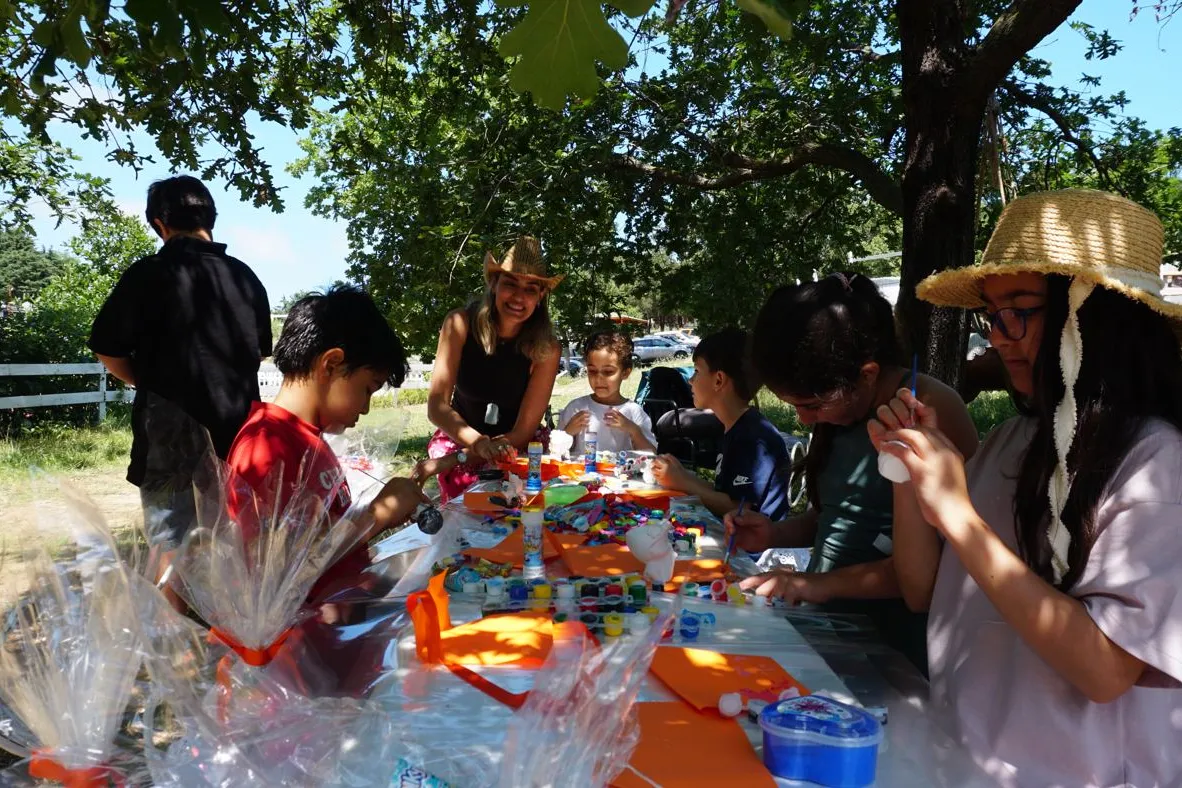
Walking into a room of people you have not met is rarely easy. Even if you are excited, a quiet voice may ask: “What if I say the wrong thing? What if everyone else is more creative?” If you are thinking about joining a group session at Artifyclub, this guide describes in general terms what a first session tends to feel like, so that the unknown becomes a little more familiar.
Arriving: no performance needed
The first few minutes are usually about settling in. You find a place to sit, see the materials on the table and say hello. Nobody expects you to be impressive. Many people feel a little shy at the beginning, and that is completely normal. The facilitator will welcome you, and often the group starts with a simple, easy moment to land in the room.
You do not need previous experience with art. You also do not need to arrive with a goal that is already perfectly clear. Curiosity is enough.
Getting to know each other gently
Most groups begin with a light introduction. It might be a name and one word about how you are feeling today, or a short creative way of saying hello, such as choosing a colour that matches your mood. You are always free to share as much or as little as feels comfortable. Passing is allowed.
Often this is also the moment when the group agrees on a few basic ways of being together: listening without interrupting, speaking about yourself rather than judging others, and keeping what is shared inside the circle. These agreements are what make the space feel safe, and you are welcome to ask questions about them.
The creative part
The centre of a session is usually a creative activity. It could be drawing, painting, collage, working with clay or another hands-on exercise, guided by a simple theme or question. The point is not to produce something beautiful. It is to give your hands something to do while your thoughts settle and new ideas appear.
You will usually have time to work quietly, and sometimes beside others. Nobody will grade your work or compare it with someone else’s. If you get stuck, the facilitator can offer a gentle prompt, or you can simply look at what others are doing for inspiration.
Sharing and listening
After creating, there is often a moment to look at the work and talk about it. This is optional. You might describe what you made, what you noticed while making it, or just one sentence. When others share, your role is simply to listen with kindness, without fixing or advising.
Many people are surprised by how much they take from listening. Hearing someone describe a feeling you thought was only yours can be quietly powerful.
Closing the session
A session usually ends with a short reflection: what stayed with you, what you would like to carry forward, or one small thing you might try before the next meeting. Then comes a warm goodbye. You leave with something you made, and often with a lighter feeling.
How to prepare
You do not have to prepare much, but these small things can help:
- Wear clothes you do not mind getting a little colourful.
- Arrive a few minutes early to settle in without rushing.
- Bring an open mind rather than a fixed idea of the “right” result.
- Give yourself permission to be a beginner.
- Write down any questions you would like to ask the facilitator.
- Be kind to yourself if you feel nervous. Most people do.
If it feels like a lot
Feeling nervous before a first session does not mean it is not for you. It usually means it matters to you. If you notice that group settings feel overwhelming in a way that affects your daily life, it can be helpful to talk with a doctor or a qualified professional as well. Coaching is a supportive creative space, not a replacement for professional care.
It is also fine to tell the facilitator what you need, whether that is a quieter seat, more time to answer or permission to simply observe for a while.
Ready to try?
If you would like to see what a group feels like, you can read more about our group coaching, look at the upcoming workshops, or register when you feel ready. If you still have questions, write to us. We are happy to answer them before you decide.