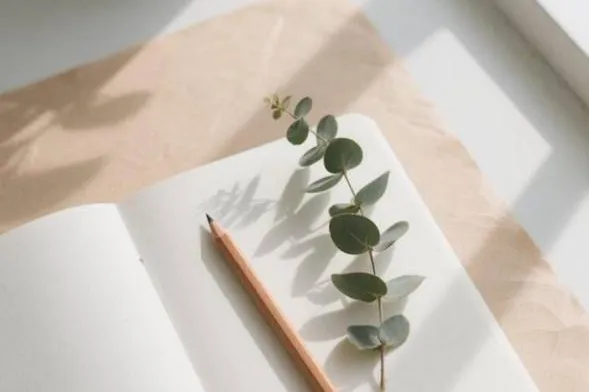
Most people who want more creativity in their lives share the same obstacle: time. We imagine that creative work needs a free weekend, a tidy studio and a clear head. Those days rarely arrive.
A ritual solves this differently. Instead of waiting for a big block of time, you give a tiny, protected space to creativity every day. Ten minutes is enough. It is short enough to be realistic and long enough for something real to happen.
Why a ritual works better than a plan
A plan says “I will paint more.” A ritual says “After my morning coffee, I sit at the table and draw for ten minutes.” The second one is specific, and it is tied to something you already do. Many people find that attaching a new habit to an existing one makes it far easier to remember.
Small and regular also beats big and rare. A short daily practice keeps your creative “muscles” warm, so starting never feels like a big leap.
Step 1: choose your moment
Look at your day and pick a moment that already exists: after breakfast, during a work break, before dinner, or just before bed. Choose the time that feels least crowded, not the one that sounds most impressive. If mornings are chaos, evenings might be gentler, and the other way around.
Step 2: prepare a tiny station
Set aside a small corner and keep your materials there, within reach and in view. A jar of pencils or brushes, a sketchbook, a small watercolour set, a few coloured pens. When everything is ready, starting takes no effort, and that matters more than you might think.
Step 3: follow a simple ten-minute shape
Use this rhythm whenever you sit down:
- Minutes 1 to 2: arrive. Take three slow breaths and put your phone out of reach.
- Minutes 3 to 4: warm up with loose lines, circles or waves, with no picture in mind.
- Minutes 5 to 8: make something small, a leaf, a cup, a pattern, or a few colours blending.
- Minutes 9 to 10: look at what you made, give it one word, and close the book.
Setting a timer helps. When it rings, you stop, even if you are enjoying yourself. Stopping a little early makes you look forward to tomorrow.
Step 4: use a prompt when your mind is blank
Some days you will sit down with no idea at all. Keep a short list of prompts so you never have to decide.
- Draw something you can see from where you are sitting.
- Paint a colour that matches today, then add two others beside it.
- Fill a small square with one repeating pattern.
- Trace one hand, then decorate it however you like.
- Draw the shape of a sound you can hear right now.
- Copy a single line from a leaf, a branch or a flower.
- Write one word and decorate its letters.
Step 5: keep it kind
This is the part that makes the ritual last. Do not judge, rate or fix what you create. Some days the page will be lovely and some days it will look odd, and both are equally valid. If you miss a day, simply return the next one. There is no streak to protect, only a space to come back to.
Some people like to date each page and flip back through the book after a month. Looking through it, you may notice moods, colours and ideas that you had forgotten, a quiet record of your days.
If ten minutes feels like too much at first, begin with five. If it feels too little on a quiet day, let the timer run a bit longer. The ritual should serve you, not the other way round, and it can change shape as your life does.
A small, honest note
A creative ritual is a pleasant way to pause and pay attention to yourself. It is not a treatment for anything. If you feel persistently low, anxious or overwhelmed, please reach out to a doctor or a qualified professional as well.
Begin tomorrow, or today
If you would like to start with a bit of company and guidance, our workshops are a gentle way to find materials and exercises that suit you. You can also learn about group coaching if you enjoy creating beside others, or write to us and tell us what your days look like. We will happily help you design a ritual that truly fits.