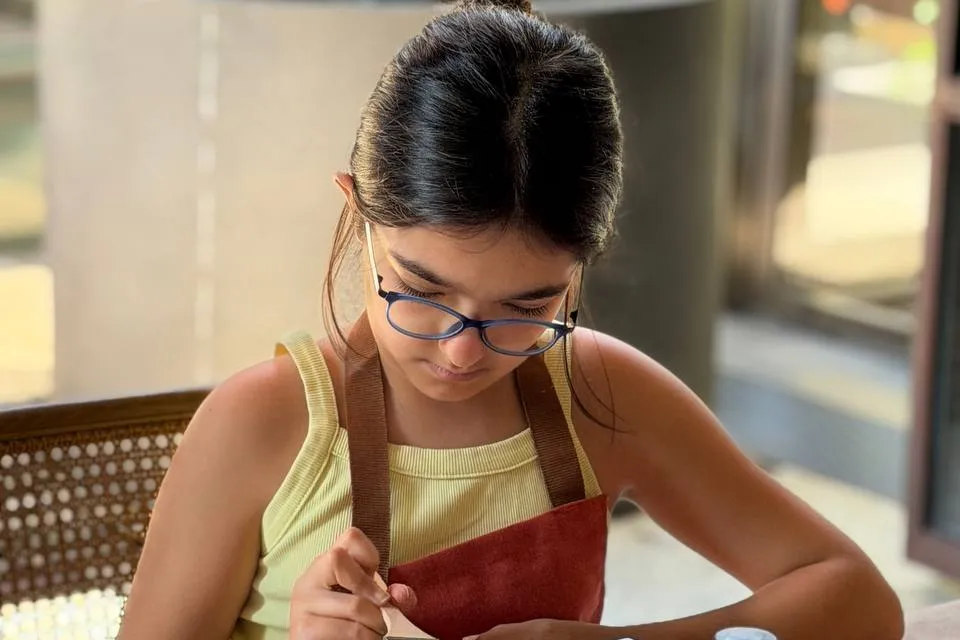
Exams, friendships, social media, family expectations, and a body and brain that are changing fast: being a teenager is a lot. Many parents notice that their teen has gone quiet, or answers with a shrug. You may want to help, but every question seems to close the door a little more. Creative expression can offer another way in, one that does not depend on a conversation.
Why teens often don’t talk
Adolescence is the time when young people are building their own identity, and with it a need for privacy. Silence is not always a sign that something is wrong. Sometimes it simply means your teen does not yet have the words, or does not want to be questioned. Direct questions such as “What’s wrong?” can feel like pressure, even when they come from love.
What creative expression offers
Painting, drawing, journaling, collage, music or making objects with their hands gives stress a place to go. Many educators observe that teenagers who have a creative outlet seem to handle everyday pressure with a little more ease. The activity gives the mind something absorbing to do, and the result is something personal that belongs to them.
It also offers a way to say things sideways. A dark landscape or a chaotic collage may carry a mood that your teen cannot yet describe. And when the hands are busy, the shoulders often drop.
It can also be a way to take a short, healthy break from screens, school and comparison, a quiet hour that belongs to them alone.
Creative expression is not a cure and not a test. It is simply a healthy, accessible habit, and it works best when it is free of judgement.
How parents can support, not steer
Teenagers are quick to notice when an activity is secretly a lesson. The more relaxed and optional it feels, the more likely they are to try it.
- Keep materials around the house: a sketchbook, markers, paint, a small canvas or wooden objects to decorate.
- Invite rather than instruct: “I’m going to paint a bit tonight. Want to join?”
- Respect privacy. Don’t read their journal or comment on their sketchbook unless they show it to you.
- Praise effort and curiosity, not skill: “I love how you mixed those colours.”
- Let them choose the medium, even if it surprises you: lettering, digital drawing, customising old shoes.
- Offer a change of place, such as drawing in a café or outside, where talking feels lighter.
Keep expectations light, too. A teen may paint for twenty minutes and then not touch a brush for two weeks. That rhythm is normal. What matters is that the door stays open and the materials stay within reach, so that when they need an outlet, it is already there.
Creating together, without an agenda
Side-by-side activities are often easier for teens than face-to-face talks. Cooking, walking or painting together lets conversation appear on its own, or not at all. Try to resist turning the moment into a conversation you have planned. If your teen opens up, listen first and skip the quick advice. If they don’t, the shared time still counts.
Be mindful, too, of perfectionism. Many teens are hard on themselves and abandon things that are not “good enough.” You can gently say, “It doesn’t have to be good. It’s just yours.”
When stress is more than everyday stress
Some stress is a normal part of growing up. But if your teen seems sad or anxious most days, withdraws from friends, sleeps or eats very differently, loses interest in everything, or talks about hurting themselves, please do not wait. Speak with your family doctor, a school counsellor or a qualified mental health professional as soon as you can, and in an emergency contact your local emergency services. Creative coaching supports confidence and self-expression, and it can sit beside professional care, but it never replaces it.
A space of their own
Some teens find it easier to open up in a group of peers where the activity leads and nobody is graded. At Artifyclub, our kids and teens coaching and art workshops give young people room to create, try things and be themselves, at their own pace. If you’d like to know more or think it could suit your teen, see our workshops or write to us. We are glad to talk it through with you.