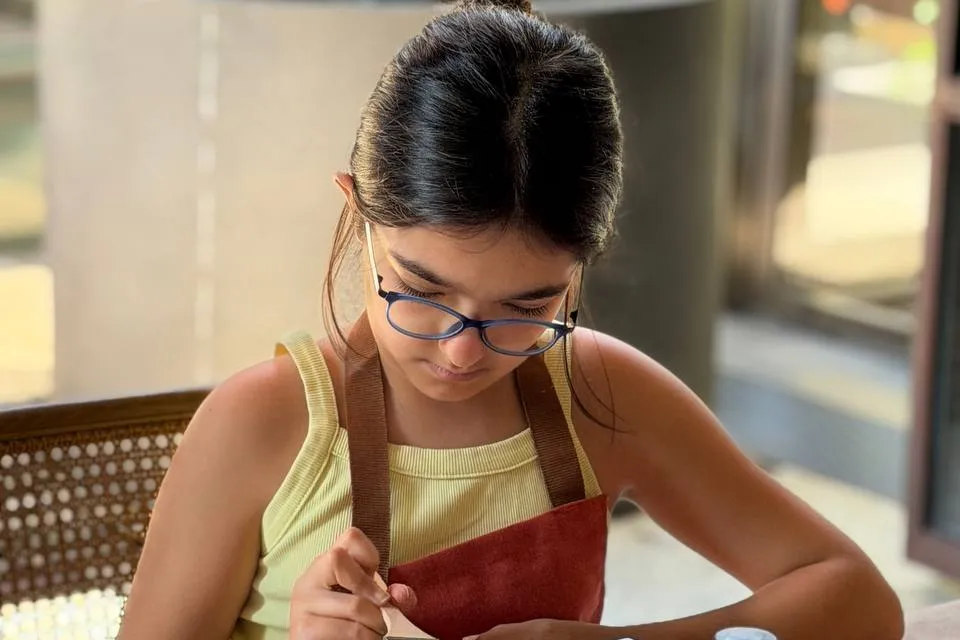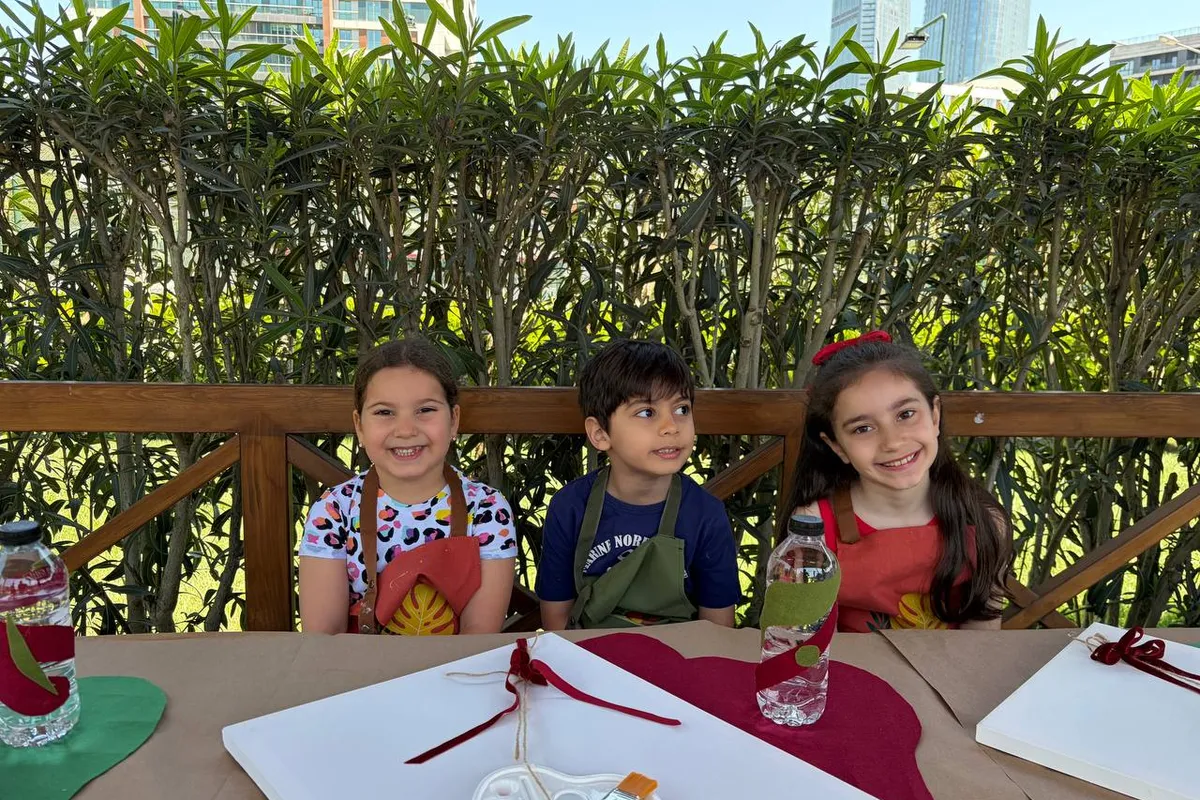
A quick search will show you many art classes for children, and they can look quite similar from the outside: bright photos, smiling faces, a list of materials. But the experience inside can be very different. Some classes are about copying a sample. Others are about exploring, trying and finding your own way. If you are choosing a workshop for your child, here is what to look for.
Process matters more than product
A good workshop cares about what the child does, not only what they take home. You may see a room where every painting looks different, and that is a very good sign. When all the works look the same, children are usually following steps rather than making choices.
A trial session is a useful way to see this for yourself. If a studio offers one, or lets you ask questions beforehand, that openness is usually a good sign too.
Ask yourself: is my child invited to decide the colour, the subject, the way of working? Making decisions is where confidence grows, even when the result is messy.
A calm, safe atmosphere
Children create best when they feel they can’t get it wrong. Look for a facilitator who responds to mistakes with curiosity (“Interesting! What would you like to do next?”) rather than correction. There should be no ranking, no comparing and no “best picture of the day.” Every child’s work is treated with respect.
It also helps if the room is welcoming to every temperament. Some children dive in right away, others watch for a while first. A good workshop gives both time.
Small groups and real attention
The group size matters because attention is what a child needs most. In a small group the facilitator can notice the quiet child in the corner, the one who keeps starting over, and the one who finishes in two minutes and needs a new challenge. Ask how many children there are per adult, and whether the facilitator knows each child by name by the end of the first session.
Take note, too, of how the facilitator speaks to children. A warm, clear voice, eye contact and a habit of asking “What do you notice?” instead of “Is that finished?” tell you a lot about the culture of the room.
Your quick checklist
When you contact a studio or visit for the first time, these questions can help you see the whole picture:
- Do children make their own choices, or follow one sample?
- Is the group small enough for each child to be seen?
- How does the facilitator respond when a child says “I can’t”?
- Are the materials safe, child-friendly and suited to the age group?
- Is the space clean, bright and ready for mess?
- Are parents welcome to ask questions and receive a short update?
- Is there any pressure to perform, compete or show at the end?
- Does the facilitator talk about the child’s effort, not just the result?
Beyond painting: skills that quietly grow
A thoughtful art workshop is not only about art. When children work next to each other, they learn to share materials, wait their turn, ask for help and cheer for someone else’s idea. They practise staying with something that feels difficult. Many educators observe that these small moments, repeated over time, support patience, self-expression and a kinder relationship with mistakes. These are life skills dressed up as play.
What a good workshop does not promise
Be careful with promises that sound too big: “Your child will become confident in three sessions,” or anything that sounds like a treatment. Growth is gradual, and every child moves at their own speed. An art workshop can support confidence and expression, but it is not therapy. If you have concerns about your child’s emotional wellbeing, a school counsellor or another qualified professional is the right person to talk to, and a workshop can sit beside that support as a place for joy.
How to know it feels right
In the end, watch your child. Do they arrive curious and leave a little lighter? Do they want to tell you about it, or show you their work with pride? That feeling is usually the best guide you have.
At Artifyclub, our kids coaching and art workshops are built around exactly these ideas: small groups, free choice and a warm space where every child is seen. You are welcome to browse our workshops, register your child or write to us with any questions before you decide.