It is 6 p.m., dinner is not ready, and a tablet is keeping the peace. If you have ever felt a small pang of guilt at that moment, you are in good company. Screens are part of family life now, and most parents are simply trying to do their best. This article is not about banning anything. It is about making creative play so easy and inviting that it can sit comfortably beside screens.
Start with calm, not guilt
Shame rarely helps anyone change. Children pick up on our worry quickly, and a household where screens are a battlefield tends to make them more attractive, not less. Try to see screen time as one of many activities in the day, not as an enemy. Your goal is not zero screens. Your goal is a day that also holds movement, company, boredom, imagination and making things with hands.
Why creative play deserves its own space
Screens mostly ask a child to receive. Creative play asks them to decide: what to draw, what to build, what happens next in the story. Many educators observe that children who have time to make things become more patient, more confident in their own ideas and better at entertaining themselves. Nothing here needs to be impressive. A cardboard box turned into a bus is as valuable as a finished painting.
Creative play also gives children something screens cannot: the feeling of “I made this.” That feeling grows quietly over time. It also gives them a topic for conversation at dinner, a gift for a grandparent, and a small sense of pride that belongs only to them.
Make the creative option the easy option
Children often choose whatever is closest. If the tablet is in reach and the paints are in a cupboard upstairs, the tablet wins. A small change in your home can do more than any rule.
- Keep paper, pencils, crayons and tape on a low shelf your child can reach alone.
- Set up a “creative corner”, even if it is only a tray on the table.
- Rotate materials every week or two so things feel fresh: clay one week, collage the next.
- Collect “loose parts” such as boxes, cardboard tubes, fabric scraps and leaves.
- Take supplies outside: chalk on the pavement, painting on the balcony, drawing in the park.
- Join in for the first ten minutes. After that, children often carry on alone.
Gentle routines instead of strict rules
Children relax when they know what to expect. Instead of negotiating every day, agree on a rhythm together: for example, creative time after school before any screens, or a screen-free hour before dinner. Explain it simply and warmly: “In our home, we make something every day.”
When screen time ends, give a short warning and a soft landing. Moving from a screen to a blank page can feel like a big jump. A gentle bridge helps: ask them to draw their favourite character from the game, or build the level out of blocks. Their interest in the screen can become the starting point of play, not its opposite.
It also helps to let your child see you being creative. If they notice you sketching, cooking something new or fixing a shelf with care, they learn that making things is something people of every age do, not just children with crayons.
When it feels hard
Some days will not go to plan, and that is fine. Boredom is not an emergency. Many children complain for a few minutes and then, almost magically, start inventing something. Resist the urge to fill that gap immediately. You can say, “I trust you to find something,” and leave it there.
If you feel that screens are affecting your child’s sleep, mood or friendships in a lasting way, or if they become very distressed when they have to stop, it is wise to talk with a paediatrician, a school counsellor or another qualified professional. Creative coaching supports everyday balance and self-expression, but it does not replace professional advice.
Giving creativity a regular home
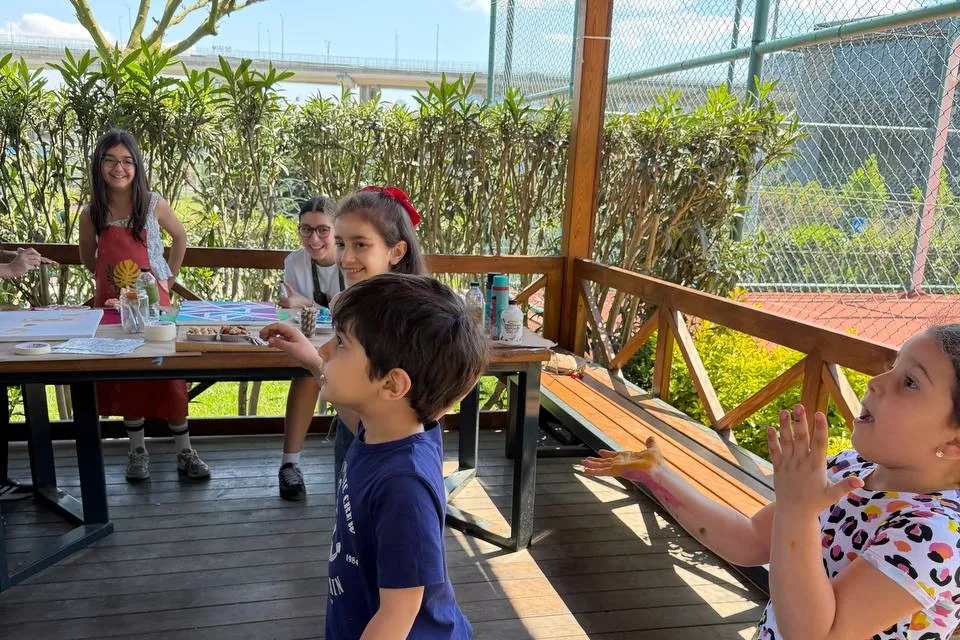
Sometimes the easiest way to build a creative habit is to join others who share it. In our kids coaching sessions and art workshops, children paint, build and play together without a screen in sight, and many parents tell us that the excitement follows them home. If you would like to see what a session looks like, explore our workshops or write to us with your questions.