Financial Literacy
Saving, budgeting and conscious valuing
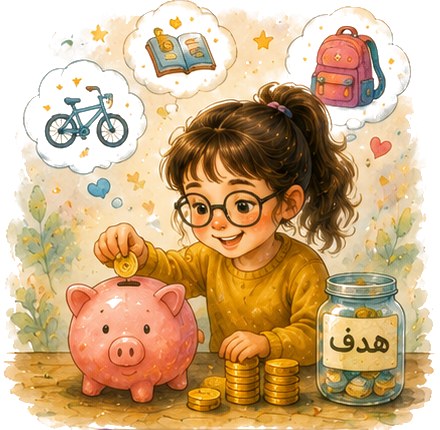
Financial literacy means understanding the value of money and learning to save and spend consciously. An aware child builds a more secure financial future.
Through games and art projects, financial concepts are learned in a simple way.
Program impact
Budgeting
dividing money between needs and wants
Saving
setting aside for a goal
Valuing
understanding the worth of things
Financial decisions
choosing consciously when spending
Financial planning
thinking about the future of money
The learning path
- 1
The idea of money
understanding money and its value
- 2
Budgeting
dividing money
- 3
Saving
setting aside for a goal
- 4
Investing
thinking about growing money
- 5
Planning
designing a financial future
Real-life examples

sx.ex1
Understands where money comes from and does simple sums for their stationery.

sx.ex2
Splits pocket money between spending and saving.

sx.ex3
Knows a pricier gift or snack is not necessarily better and treats friends fairly.

sx.ex4
In future will budget and plan finances consciously.
Connection to coaching
With questions like “what are you saving for?”, your coach accompanies the child toward conscious financial decisions.
Let’s begin together →
Questions, answered
Is it too early for a child?
No. Simple ideas like saving and choosing between wants can be learned through play from early childhood.
Does the child work with real money?
In the workshop we use play and symbolic money; parents continue real practice at home.
Which ages suit it?
From about 6 with simple methods, and for teens with budgeting and goal setting.